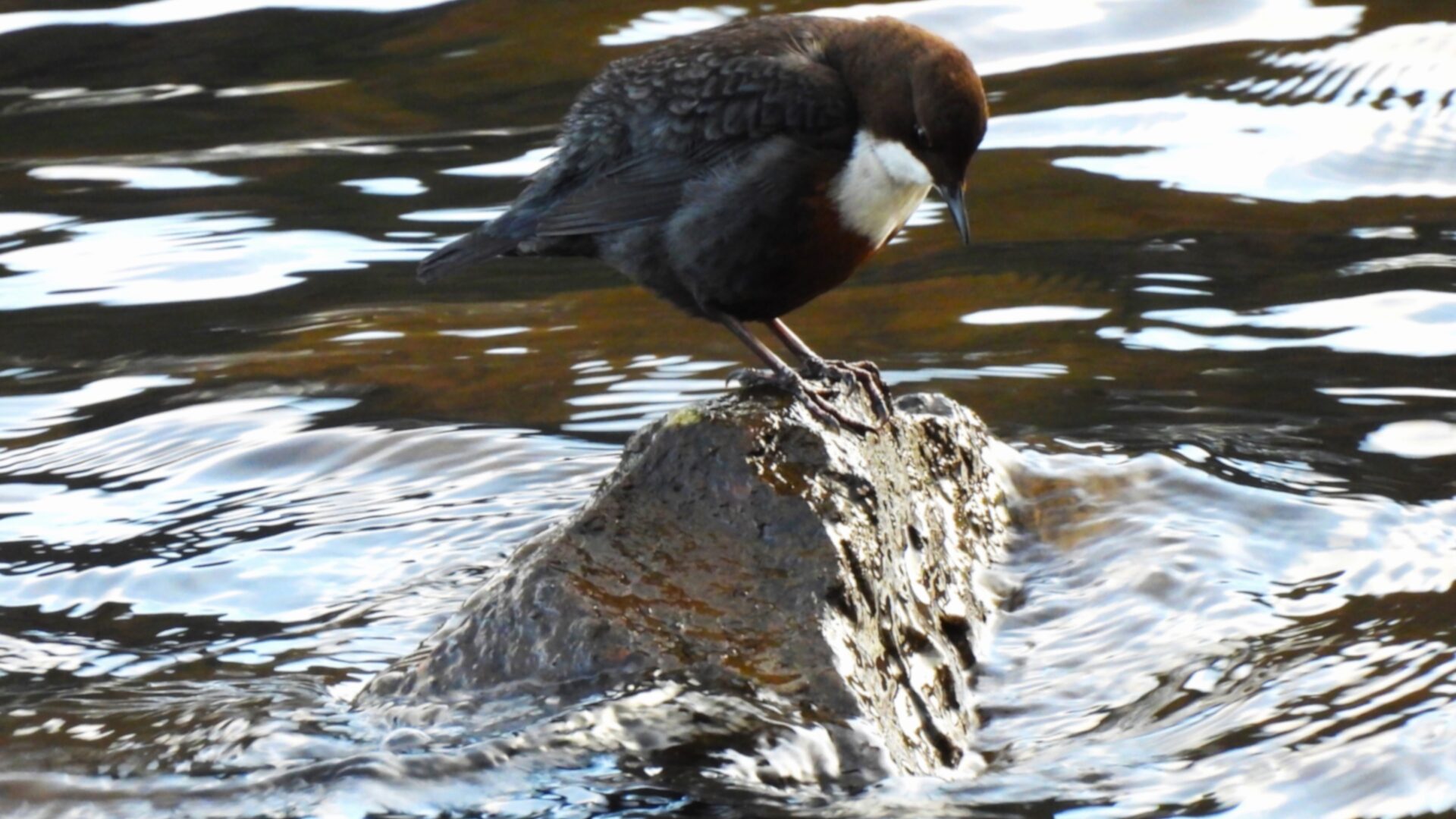
LookWild: Song of the stream – the fascinating life of the dipper
-
Date posted: 05/03/2026
-
Time to read: 4 mins
The UK’s only aquatic songbird is one of the most enchanting symbols of streams, rivers and lochshores. As the season turns, Gareth Kett traces their movements in Loch Lomond & The Trossachs National Park.
With luck, if you take a winter walk along the stoney shores of Loch Earn or Loch Voil, or a similar lochshore in Loch Lomond & the Trossachs National Park, you may come across one of our most enchanting and hardy little birds – the dipper.
Dippers are fascinating birds, little bigger than a robin, and relatively easy to watch.
The only truly aquatic songbirds in the UK, dippers usually leave their tumbling rocky river breeding grounds each autumn, in search of ice-free lochs with more reliable food supplies.
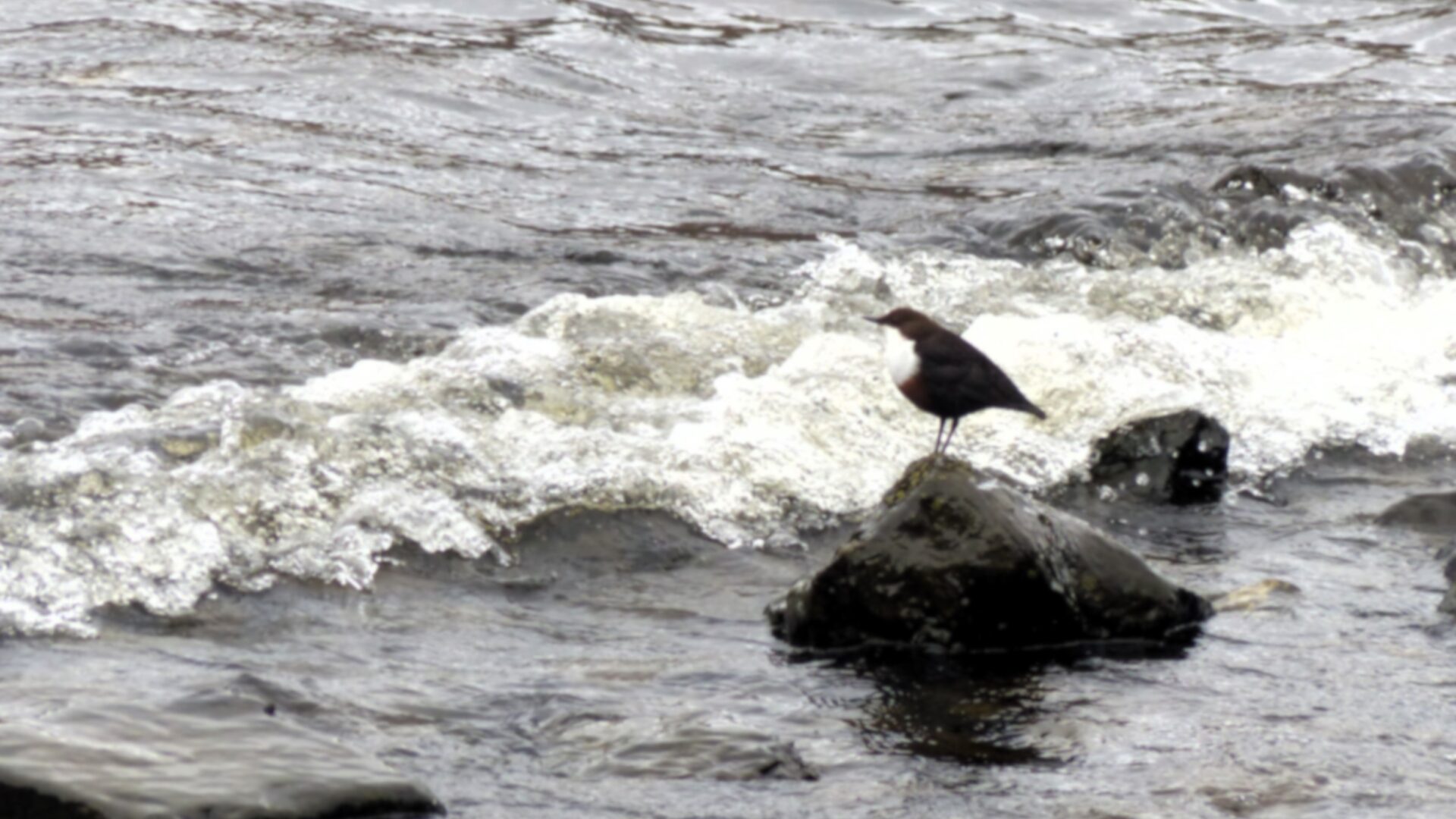
Not that life seems much easier once they are there. Dippers frequently have to endure rain, wind and waves as they bob up and down on rocks in the shallows, before plunging head-first into the water in search of invertebrate prey, using their stubby wings and compact body to ‘fly’ underwater in the same way as penguins. Their strong legs and sharp curved claws grip and move stones on the riverbed.
Adapted for the aquatic life
High haemoglobin levels allow them to remain under water for up to 30 seconds, before they bob up again like corks, returning to their launchpads or others nearby rocks, or diving again after a breath of air.
Solid bones help them to stay submerged and very dense and oily plumage provides warmth and waterproofing. Their nostrils are sealed by nasal flaps while submerged and a third eyelid acts like goggles, allowing them to see clearly underwater.
Like all animals, dippers have their own personalities. Some appear relatively unphased by people nearby, while others rapidly fly away on their small, whirring wings to nearby quieter areas. They never fly high, preferring instead to keep just above the water.
The bobbing or ‘dipping’ action of dippers earnt them their name, but why do they do it? It seems that the dipping motion, together with flashing white eyelids, is a way of communicating, displaying fitness for holding territories and breeding. This motion is also thought to provide camouflage against a turbulent watery background from predators such as sparrowhawks and stoats.
Moving to higher ground
But with the end of winter approaching, spotting dippers could soon get a little harder. It’s more difficult to find dippers along the National Park lochshores in the warmer months. Come spring, with warmer temperatures and the emergence of more invertebrate prey such as caddisfly and mayfly larvae, stoneflies, freshwater shrimps, molluscs, small fish, fish eggs, worms and tadpoles in rivers, brooks and streams, most dippers move away from the lochshores to fast-flowing, rocky upland water courses, such as Edinample Burn and the River Fillan.
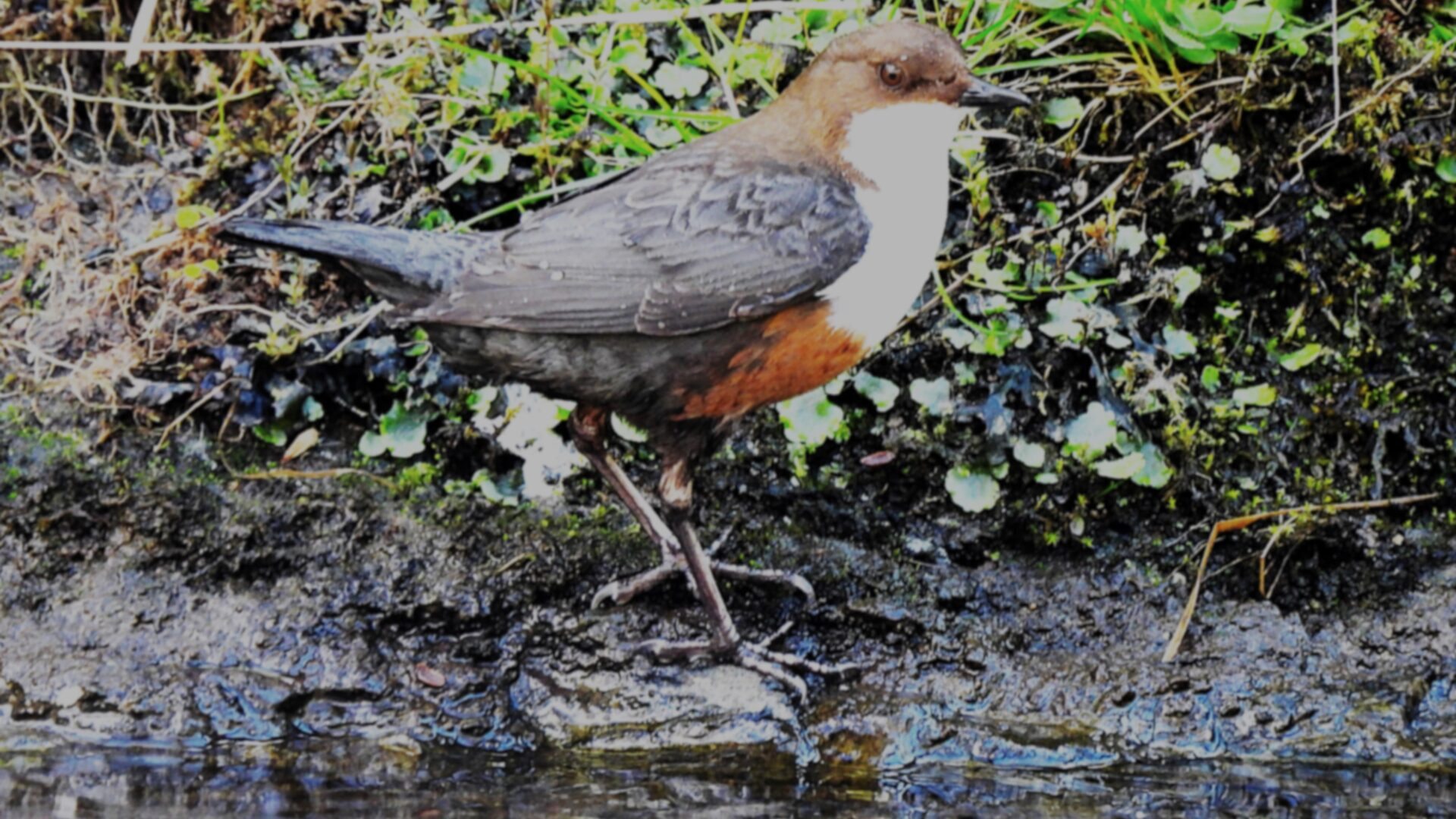
Usually solitary for most of the year, here they pair up and breed, making large domed nests of moss, grass and leaves, typically tucked into hidden, damp, holes and crevices near to the water. Taking advantage of the seasonal abundance of prey, parents make hundreds of sorties from the nest each day, bringing back food for their brood of usually four or five chicks.
After they have fledged, the chicks spend 20-30 days with their parents before becoming independent. Dippers in the uplands typically only raise one brood each year. Then, with autumn bringing cooler temperatures and diminishing prey, most dippers head for the lochshores to see out the cold season once again.
A lucky encounter
The warmer months can make it a little harder to spot dippers – but one of my most memorable encounters with one of these beautiful birds happened last summer.
I came across a stream near Killin with a dipper moving purposefully along it in search of prey. As I crouched and watched, the dipper started using its beak to turn over rocks almost its own size, looking for invertebrates beneath, seemingly oblivious to my presence.
Eventually it approached to within five metres of me. It felt like a privilege that this bird had ventured so close. Did it really not know that I was there? After a few minutes and a couple of photos, amazed that I hadn’t been spotted, I crept away, leaving the dipper to continue its energetic quest for food.
Gareth Kett is a National Park Ranger for Loch Lomond & The Trossachs National Park. Find out more about what the National Park is doing to protect its rich landscapes, habitats and wildlife here.