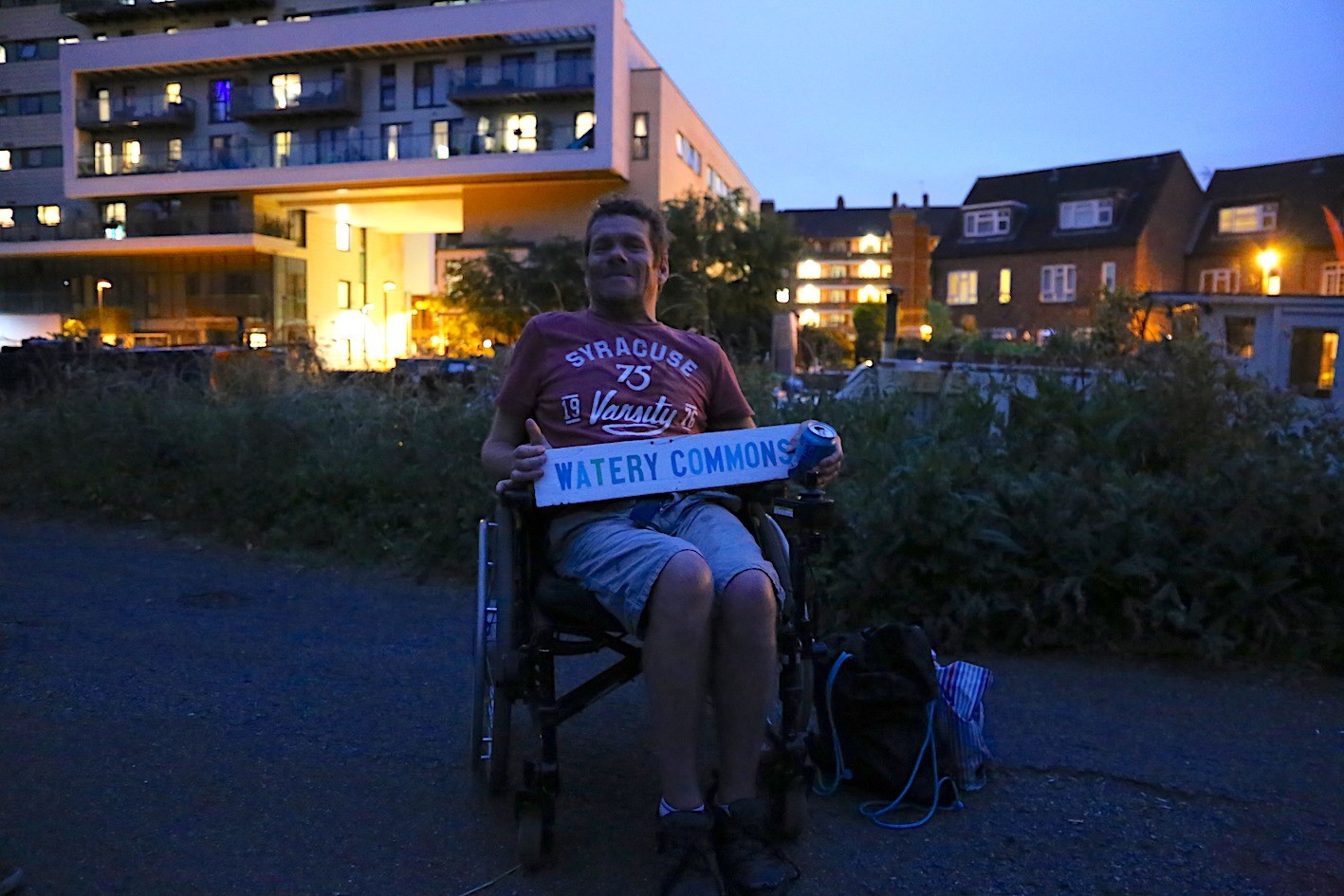
Inspired by nature: Jamie Beddard
-
Date posted: 24/02/2022
-
Time to read: 10 minutes
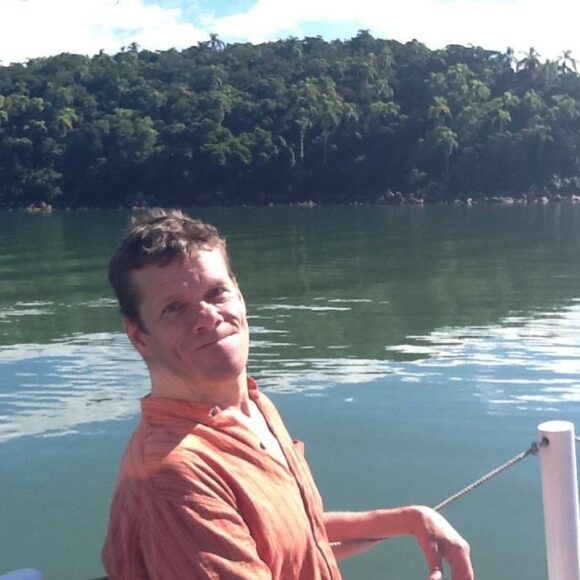
Jamie Beddard
Playwright, director, actor and advocate, Jamie Beddard, is a man of many parts. His latest is as a Co-Director for Green Space, Dark Skies – part of the pan-UK Unboxed festival of creativity taking place in AONB and the National Parks. Here he explains the importance of being outdoors; for work and life.
‘I love working outdoors – when you’re working outdoors, unexpected things happen,’ says Jamie Beddard. ‘You also get different people coming to see, different from those who usually inhabit our theatres.’
He’s had ample opportunity to observe this difference, having seen audiences reacting to his work for some 25 years, since leaving the University of Kent with a Sociology Degree. He was, he says, fortuitously thrust into the world of performance; on stage and behind the scenes.
Alongside appearances in the National Theatre’s production of The Threepenny Opera in 2016, Jamie’s credits include The Messiah at Bristol Old Vic, Estragon in Tottering Bipeds’ production of Waiting for Godot, Ubu for Graeae Theatre Company, the Dormouse in Alice in Wonderland at Nottingham Playhouse and Mr Jonny Gotobed, both on stage and on TV, for the BBC adaption of Carrie’s War.
He is currently Co-Artistic Director of Diverse City and Lead Artist for Extraordinary Bodies, and has been Associate Director of Graeae Theatre Company, co-editor of ‘Disability Arts in London’ magazine (DAIL) and facilitated in many higher education institutions, drama colleges and community settings.
His outdoor work includes directing ‘Breathe/Battle for the Winds’, the opening ceremony celebrating the Olympic and Paralympic Sailing events in 2012 in Weymouth, bringing together companies and 80 performers, from the UK and Brazil.
Even when access is difficult – Jamie is a wheelchair-user – and the weather is against him: ‘It can be hard when the weather is inclement’, he is always up for the challenge of working outside. ‘I like working with dramatic and amazing backdrops,’ he says.
Although brought up in London, he has always had family roots ‘in the middle of nowhere’ in Orford, Suffolk, and his love of the outdoors is rooted in the big skies, forestry and spectacular scenery there; ‘I used to have a tricycle and loved tearing through the woods, many great childhood memories’ he says.
Being outdoors and away from normal surroundings undoubtedly helps his creativity.
‘I go away a lot, especially pre-pandemic, and travel up and down the country with work and following football – I’m on my own, away from my desk and able to think and dream’ he says.
He lives in Stoke Newington in London with his partner and two children and gets out every day, a pandemic ritual when everything suddenly became much more local. ‘I really enjoy a circuit of the park, the fresh air, the trees, the wildlife, the fellow walkers,’ he explains. ‘I get ideas when I’m out.’
Needless to say, the outdoors can be really challenging from an access point of view, and he is passionate about ‘opening up the outdoors’. ‘We must find ways to ensure the countryside is not the preserve of the few, but open and inclusive to all,’ he says.
He believes the countryside just isn’t accessible to many people; ‘Many different people find the countryside difficult to get to for a variety of reasons.’ Another issue he’s noticed is that: ‘Common land is diminishing, so there’s less space for people to use.’
Environmental issues and the climate crisis provide the backdrop of another show he is currently working on; ‘Delicate’; ‘We are exploring delicate and fragile bodies in a world that is changing, unruly and precarious,’ he says. Opening in Norway in July, before touring the UK in the autumn, this is the latest show staged by Extraordinary Bodies. A professional circus company, Extraordinary Bodies demonstrates how disabled and non-disabled people can work together under the guiding principle of showing how the world could be, if everyone was equally valued.
And then there is Green Space Dark Skies. The event will see 20,000 volunteer ‘Lumenators’ carry low-level, environmentally friendly light globes to create giant patterns and images for people to see in the dusk in wild places. The locations will be kept secret until nearer the time, to add to the element of drama and theatricality.
The artistic idea is that these lights, when illuminated in patterns, will help nature connectedness through personifying the landscape. Jamie will be Co-Directing, alongside Billy Alwen, one of the sites in the South-West. Of the project he has written: ‘Opening up and animating these beautiful landscapes is an artistic dream, and working in places and with communities that are new to us is incredibly exciting.’
Directing such an operation will be another challenge, especially, he says, having the narrow time of dusk to stage the event, but he’s confident that it will be a success and that the events will attract people who have never been to anything similar. He can’t wait to witness their reactions: ‘It’s going to be unlike anything I’ve done previously, a spectacle of lights, landscape and community’ he says.
💭You might have heard of biodiversity, but what does it actually mean?
It’s the variety of life around us from plants and insects in a meadow to birds, mammals, fungi and the tiny organisms we can’t even see.
But it’s not just a list of species - it’s the intricate web of relationships between them, and our National Parks are home to an incredible diversity of life.
Protecting biodiversity means protecting that web of life.
📸 An adder in @southdownsnp by Simon Watkins.🐍
#Biodiversity #NatureLovers


Could spending more time among trees be good for us?🌳
Research into forests suggests natural compounds called phytoncides could promote a sense of wellbeing and that time spent in woodlands can help decrease feelings of stress and anxiety.
Forest bathing is the Japanese practice of shinrin-yoku - which translates as ‘forest bath.’ It’s all about immersing ourselves in nature. Not to get steps in. Not to reach anywhere. Just to feel, be still and be present.
And our National Parks can certainly help. From pine forests and wooded valleys to ancient trees. Our parks are helping people to slow down and reconnect with the natural world every day.
Have you ever tried forest bathing? Tell us below👇
1. Stanmer Woods - @southdownsnp
2. Whinlatter Forest - @lakedistrictnpa
3. Cairngorms National Park @cairngormsnationalpark
4. North York Moors National Park @northyorkmoors
#Mindfulness #ForestBathing #Wellbeing #NationalParks

Has the rain reached you yet? 🌧️
A change in the weather is making its way across our National Parks. And with it comes a different rhythm to the landscape - changing how our surroundings look, sound and feel.
The sound of rain. The smell of wet earth. The air feeling fresher. Wildlife finding shelter.
What do you notice most when the rain arrives?
#RainyDay #BritishWeather #NationalParksUK

They may look like windmills, but in The Broads National Park, they are actually windpumps.
Rather than grinding flour, they were built to pump water from the marshes, helping to drain the land for agriculture and grazing.
Today, these distinctive structures are part of what makes the Broads landscape so recognisable.
And while this is a story from the Broads, it’s one that can be found across all 15 of our National Parks - landscapes shaped by people finding ways to adapt to live and work within their landscape. Something which still remains the case today.
Did you know that one of these mills is said to be haunted? Comment down below which one you think it is 👇
In photograph order:
📍1. St Benets Mill
📍2. Horsey Mill
📍3. Turf Fen Mill
📍4. Thurne Mill
📍5. Bograve Mill
#NorfolkBroads #NationalPark #Windpumps

✨🌙 Look up!
With a partial solar eclipse taking place tonight across the UK, we’re reminded about how important it is for our dark skies to be protected. Our National Parks are home to some of the best places in the UK to enjoy them, due to low levels of light pollution.
These incredible photos capture another recent celestial phenomenon that has been on display for stargazers and is peaking tonight - the Perseid meteor shower.
The sightings were captured in @northyorkmoors - home to one of the UK’s largest areas of protected dark sky.
🌟Tag us in your eclipse photos across our National Parks. Just be sure to follow safe viewing and photography guidance while you snap!
📷 1. Perseid meteor shower at Skelton Tower by Richard Horsman.
📷 2. Milky Way and Perseid meteor shower at Sutton Bank by Russ Norman.
📍North York Moors National Park #DarkSkies #SolarEclipse #Perseid #MeteorShower

Just goats being goats. 🐐
These incredible animals call the Valley of Rocks in @exmoornp home - scaling walls and cliffs, grazing on the rich meadows and, occasionally, blocking the roads!
They’re a wonderful reminder of why our National Parks are so important, providing a home for such a diverse range of wildlife.
Have you ever spotted one?
📷 Exmoor National Park
#ValleyOfRocks #Exmoor #Goats #NationalPark

Look out for us at the cinema. 🎬🌳
Our latest Wild Spaces episode, screening before selected films, takes you to Northumberland National Park. Their team, alongside farmers, landowners and volunteers, is working together to create healthier, more resilient landscapes through woodland creation and hedgerow planting.
It’s a story of partnership, long-term thinking, and the small actions that can have a lasting impact.
Find out more about the project and watch the episode via the link in our bio. 🔗
@northumberlandnationalpark
#WildSpaces #Northumberland #TreePlanting

💭You might have heard of peatland, but what exactly is it and why does it matter so much?
Peatlands are our natural climate allies. They store vast amounts of carbon, support rare wildlife, improve water quality, reduce flood risk and preserve thousands of years of archaeological and cultural history.
Some of the UK`s most important peatlands are found within our National Parks, making them critical places for tackling the climate and nature crises.
Across the UK`s National Parks, peatland restoration projects are helping damaged peatlands recover, benefiting both nature and people.
📍Dartmoor National Park
#NationalParks #Peatlands #NatureRecovery
