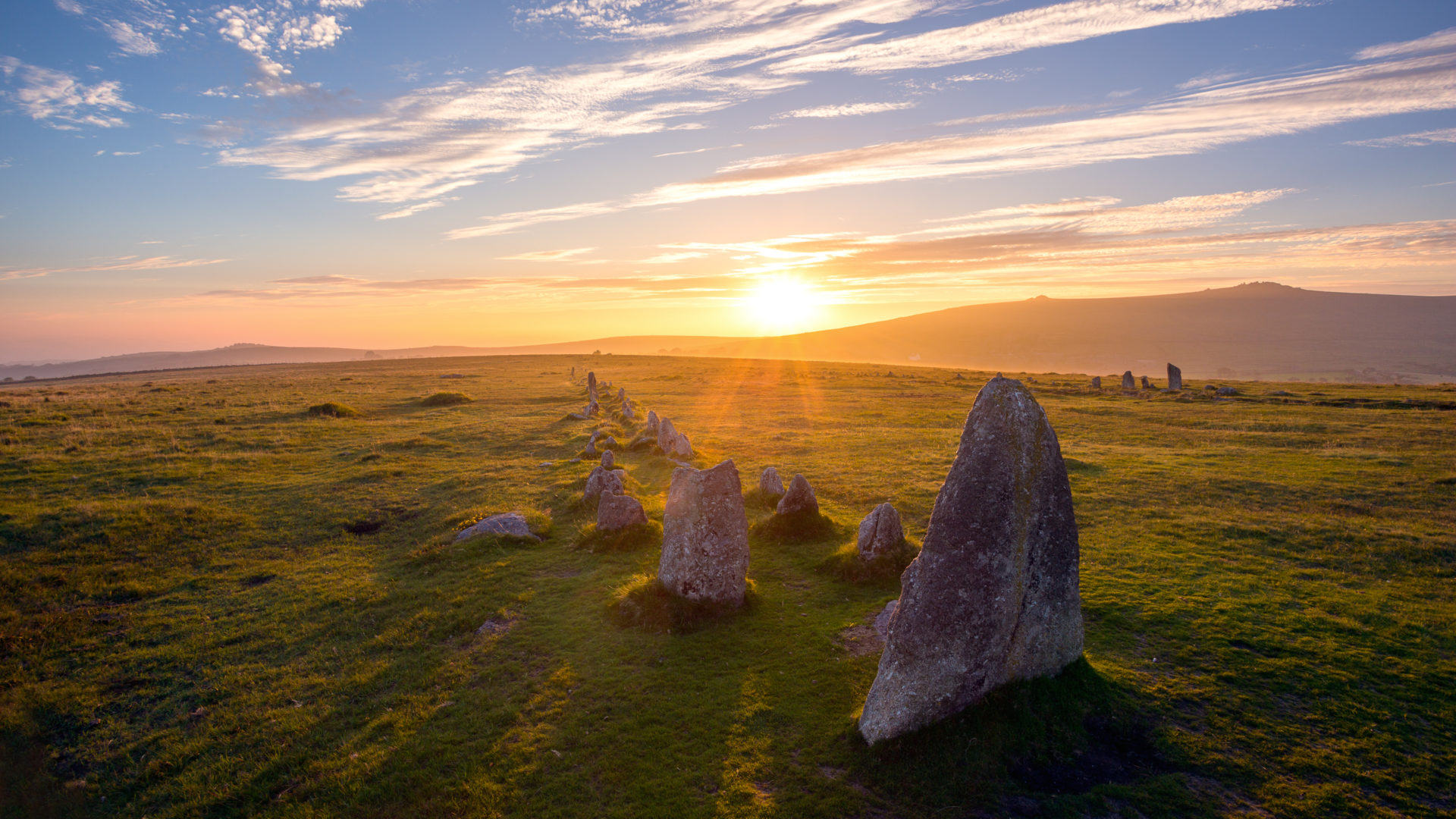
Look Wild: Dartmoor Up Close
-
Date posted: 19/05/2022
-
Time to read: 6 minutes
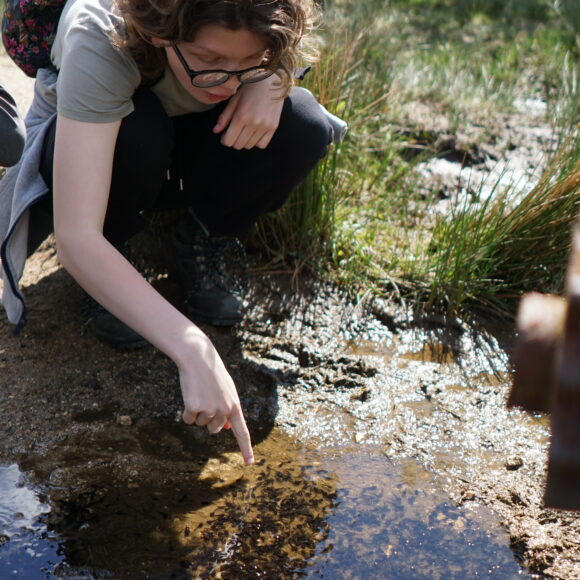
Spring is a fantastic time to explore your National Park and get closer to wildlife. On Dartmoor the team have just hosted a LookWild weekend to shine a light on it’s special wildlife looking at mires, moors and woodland. Over the course of the Look Wild weekend more than 100 people took part investigating Dartmoor alongside volunteers and experts offering a helping hand to record over 100 different species. Using the iNaturalist app participants were able to start identifying wildlife really quickly, here’s a few important species that were found…
Bogs and mires
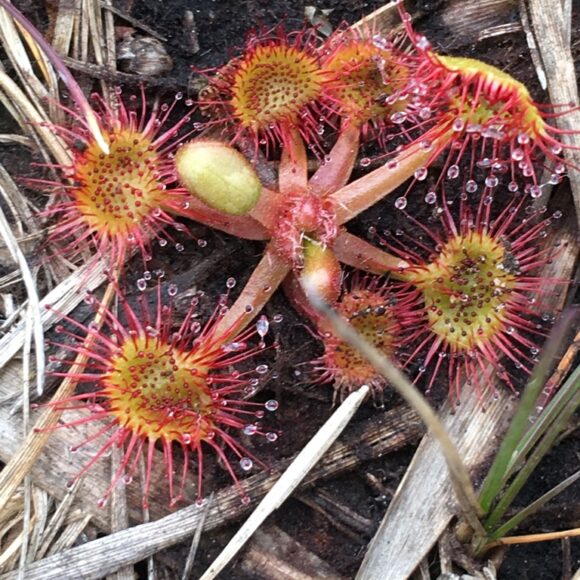
Dartmoor, like many of our National Parks is home to important bogs and mires which lock up carbon and are rich in biodiversity. Working around the edge of a valley mire investigators soon discovered a wide range of plants which are adapted to the harsh acidic conditions. These incredible plants cannot get enough nutrients through their roots from the harsh conditions they grow in so they have a special adaptation. Their leaves are fringed with sticky tendrils which grab onto unfortunate insects. Once captured the insect is slowly digested providing important food for the plant.
Observation © elinorn
Sphagnum mosses
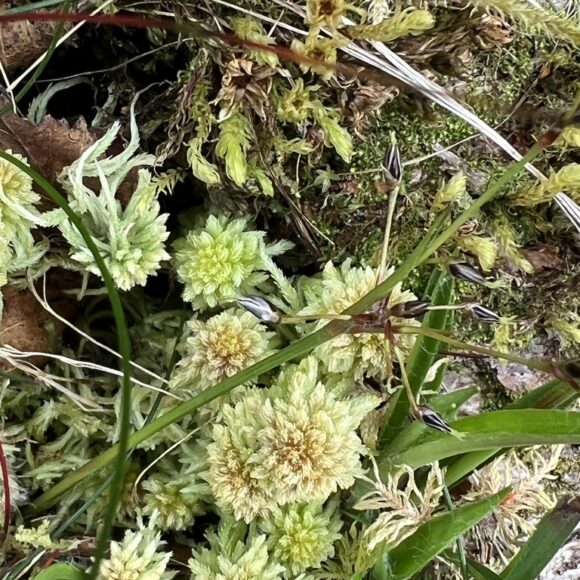
This moss is a bog builder; slowly building layers of fresh peat as it grows and locking up carbon at the same time. Sphagnum moss can be incredibly absorbent holding 20 times its own weight in water.
Observation © James-Windle

Heathland species
On Dartmoor there are two types of gorse- the prickly green bushes that cover the moors in many places. It’s fairly easy to tell the two gorses apart. The common gorse known in the southwest as furze flowers through the spring until around July filling the air with the smell of coconut and summer holidays whereas the smaller western gorse comes into flower and can be seen from July onwards.
Observation © A-Emmerson

Temperate rainforest
Dartmoor is not just open moorland and dramatic views of granite tors. Over time water has carved its way across the moor producing magnificent river valleys cloaked in woodland which is home to important wildlife. These damp humid woodlands are wonderfully rich in mosses, ferns and lichens and are rightly known as our temperate rainforests . There are two types of oak tree native to the UK- the pedunculate oak and the sessile oak. In the wooded valleys of Dartmoor sessile oak is dominant. You can identify it by its stalked leaves in spring and stalkless acorns in autumn.
Observation © Steve_Mcwilliam

Pied flycatcher
Every year the pied flycatcher makes an epic journey flying thousands of miles from its winter home in west Africa, over the Sahara desert back to the oak woodlands of western Britain. Its arrival coincides with the trees bursting into leaf and the subsequent bounty of caterpillars on which to feed its chicks.
Observation © A_Emmerson

Red wood ant
In the woodlands you can also find huge wood ant nests built from twigs and woodland debris which the ants have foraged. These nests work as carefully climate controlled nurseries where the young ants are raised. Some ants from the nest work as farmers looking after colonies of aphids high in the canopy and “milking” them for honeydew which is their main food. Don’t get too close though they can nip and even squirt formic acid at unwanted guests.
Observation © Steve_Orridge
If you’ve been inspired to get out into nature, you can share any photos or observations with us and get featured on our social or our newsletter! Send your observations to connect@nationalparks.uk
Join i-Naturalist and start identifying nature near you today! LookWild is a brilliant citizen science project that helps contribute to our data and knowledge of wildlife and habitat health across the UK.
This Blog was written by Andy Bailey, Outreach and Interpretation Officer at Dartmoor National Park.
15 National Parks. One shared challenge. Our climate is changing, and with it comes an increased risk of wildfire across our landscapes.
That’s why we’ve committed to taking action through our new Wildfire Management Position Statement. Together, the National Parks will work to support nature recovery to help manage wildfire risk, plan for and strengthen wildfire response and coordination, improve risk management and preparedness, and share clear, consistent public messaging.
But we can’t do it alone.
Communities, organisations, land managers and visitors all have a role to play in reducing wildfire risk. By working together, we can help protect our National Parks and prepare for a future where hotter, drier weather may increase the risk of wildfire.
Read the full statement by clicking on the link in our bio 🔗
Photos:
Slide 1 - Fighting the Glenmore wildfire, © Ed Smith. Slide 2 - Fighting the Glenmore wildfire, © Malcolm Smith. Slide 3 - View across Loch Morlich during Glenmore wildfire, July 2026, © Brenna Jessie. Slide 4 - Fighting the Glenmore wildfire, © Malcolm Smith. Slide 5 - View from the cab of a tractor aiding in fighting the wildfire in the Cairngorms National Park, CPNA. Slide 5 - Firefighting vehicles at the Glenmore wildfire, © Malcolm Smith.
#Wildfires #NationalParksUK


It’s not every day you get to see one of our National Parks in biscuit form on @britishbakeoff!
Last night, The Great British Bake Off contestant @itsdoctoryan created a beautiful biscuit mosaic inspired by the Broads National Park, perfectly capturing the view at St Benet’s Mill, Thurne.
And it wasn’t just a feast for the eyes as the mosaic was made using treacle and ginger, honey and lemon, cocoa and malted milk, and pistachio biscuits.
Two great things combined: a beautiful National Park view and delicious biscuits. What could be better than that? 💚
Photo: Channel 4
#GBBO #BakeOff #NorfolkBroads @broadsnationalpark

You’ve likely heard of one - but what does it actually do?
Our 15 Parks wouldn’t be able to function without the authorities working behind the scenes to keep them running.
And each authority relies on people. People within the community, volunteers, staff and members. People that run businesses, or partner as organisations. People that are skilled and knowledgeable in a variety of areas from wildlife to accessibility.
Our National Parks are full of people and action, and it’s the Authorities that bring them all together.
💚
#NationalParksUK #NationalParkAuthorities

The Yorkshire Dales has one of the highest concentrations of caves and caverns of any of our 15 National Parks - a whole landscape hiding beneath the ground.
Our National Parks don’t just protect and preserve the landscapes we see every day. They also help care for historic and unique places discovered by our ancestors, like Ingleborough Cave and Gaping Gill, both of which were shrouded in myth and legend until they were explored by Victorians in the 1800s.
There’s so much more to our National Parks than meets the eye and sometimes, quite literally beneath the surface 👀
#YorkshireDales #GapingGill #Ingleborough

A week on from National Parks UK’s Big Volunteer Weekend, we’re still celebrating the people who make a difference across our National Parks.
Last weekend, hundreds of people came together across all 15 National Parks to give their time, share their skills and support our landscapes.
But volunteering in our National Parks doesn’t happen just one weekend a year. All year round, volunteers play an incredible variety of roles – from leading guided walks and supporting education, to conservation, planting and caring for our landscapes.
Every volunteer makes a valuable contribution to protecting our natural and cultural heritage. We simply couldn’t do what we do without you. 💚
So, to all our volunteers: thank you for your time, energy, enthusiasm and everything you bring to our National Parks.
If you know someone who volunteers in a National Park, help us spread the thanks by sharing this post. 🌿
#Volunteers #NationalParks #NationalParksUK

Mae’r Bele yn un o famaliaid prinnaf Cymru, ond mae eu niferoedd yn tyfu yn raddol. Mae hynny’n newyddion da i’n coetiroedd ac i’r Parciau Cenedlaethol, sy’n darparu rhai o’r cynefinoedd pwysicaf ar gyfer bywyd gwyllt ledled Cymru a Phrydain.
Ym Mannau Brycheiniog, mae’r prosiect adfer wedi gosod blychau nythu yn y coed, ac mae gwaith monitro wedi nodi presenoldeb y Bele, gan gynnwys grwpiau teuluol. Mae’r ffilm arbennig hon yn dangos un ohonynt ar waith. 🐾
Mae’n atgof hyfryd o’r hyn sy’n bosibl pan ddaw coetiroedd iach a gwaith cadwraeth arbenigol at ei gilydd i roi’r gofod sydd ei angen ar rywogaethau prin i wella.
Pine Martens are one of Wales’ rarest mammals, but they’re slowly making a comeback. That’s good news for our woodlands, and for National Parks, which provide some of the most important habitats for wildlife across Wales and Britain.
In Bannau Brycheiniog (the Brecon Beacons), the recovery project has installed treetop den boxes, with monitoring identifying pine martens, including family groups. This special footage shows one in action. 🐾
It’s a lovely reminder of what can happen when healthy woodlands and specialist conservation work come together to give rare species the space they need to recover.
#BreconBeacons #BannauBrycheiniog #PineMartins #Wales

It’s the Autumn Equinox 🍂
Our National Parks are always changing in time with the rhythm of nature, but this becomes particularly noticeable when autumn arrives.
Deer begin to rut, spiders’ cobwebs glisten in the fresh light, fungi become more prominent, and leaves begin to change colour.
What changes have you noticed so far? 🧡
#Autumn #AutumnEquinox #NationalParks

“You look after the National Park not for yourself, but for people who are coming, the ones who are following you.”
These are the words of Ron Wood, who has been volunteering for the Lake District National Park for over 60 years. His story reflects the vital role volunteering plays across our National Parks: keeping them thriving, communities invested, and people connected to and caring for our landscapes.
Over the decades, Ron’s incredible journey has seen him remain steadfast in his commitment through droughts, hand, foot and mouth disease, and the ever-changing rhythms of nature. Through it all, one thing has remained constant: his dedication to looking after the environment for those who come after him.
You can read Ron`s full story by clicking the link in our bio or learn more about volunteering at nationalparks.uk/volunteering 🔗
📸Photos by @lakedistrictnpa
#LakeDistrict #Volunteering #NationalParks
